
Anti-SFRP2 Antibody

- SKU:
- STPA00085
- Antibody Type:
- Polyclonal
- Applications:
- WB
- Applications:
- IHC
- Reactivity:
- Human
- Reactivity:
- Mouse
- Host Species:
- Rabbit


Description
SFRP2 Antibody
SFRP2 Antibody is a rabbit polyclonal antibody directed against SFRP2, offered by Assay Genie for research applications. Reported applications include WB and IHC. Reported reactivity: Human and Mouse. Purified by Peptide Affinity.
Secreted frizzled-related protein 2 (SFRP2) is a member of the SFRP family that modulates Wnt signaling—a pathway essential for neurodevelopment, synaptic plasticity, and tissue regeneration. While SFRP2 has been extensively studied in skeletal stem cell biology, emerging evidence suggests its relevance in the central nervous system, particularly in neurodegenerative disease contexts (1). SFRP2 can act as both a Wnt antagonist and agonist, depending on cellular context. In neural tissues, Wnt signaling governs processes such as neuronal differentiation, axonal guidance, and synaptic maintenance. Dysregulation of Wnt pathways has been implicated in Alzheimer’s disease, Parkinson’s disease, and multiple sclerosis. SFRP2’s ability to fine-tune Wnt activity positions it as a potential regulator of neuroinflammation and neurogenesis. Recent studies show that SFRP2 deficiency impairs stem cell recruitment and differentiation, suggesting that it may influence neural stem cell function and brain repair mechanisms (1). Its role in modulating LRP6 activation and downstream Wnt target genes such as Axin2 and Cyclin D1 further supports its involvement in maintaining cellular homeostasis under stress or injury. Given its dual regulatory capacity and influence on regenerative signaling, SFRP2 is a promising candidate for therapeutic exploration in neurodegenerative disease. Enhancing SFRP2 activity may promote neural resilience and repair, offering new avenues for intervention in aging and neurodegeneration. This antibody is also available conjugated to ATTO 390, ATTO 488, ATTO 594, APC, Biotin, FITC, HRP, PerCP and RPE. Supplied in 100 µg. For research use only; not for diagnostic or therapeutic procedures.
| Product Name: | SFRP2 Antibody |
| Product SKU: | STPA00085 |
| Size: | 100 µg |
| Target: | SFRP2 |
| Host Species: | Rabbit |
| Antibody Type: | Polyclonal |
| Research Areas: | Stem Cells, Signaling Pathways, Wnt / Beta Catenin Pathway, Cardiovascular System, Heart, Cardiogenesis, Transcription Factors / Regulators |
| Buffer: | PBS pH 7.4, 50% glycerol, 0.09% sodium azide |
| Storage & Shipping: | Store at -20°C. Shipped on Blue Ice or 4°C. Conjugated variants should be stored according to the product label. |
| Format: | Liquid |
| Applications: | WB, IHC |
| Purification: | Peptide Affinity Purified |
| Concentration: | 1 mg/ml |
| Reactivity: | Human, Mouse |
| Recommended Dilution: | WB (1:1000); IHC (1:50); optimal dilutions for assays should be determined by the user. |
| Specificity: | Detects 37 kDa. |
| Guarantee: | 12 months from date of dispatch |
| Immunogen: | Synthetic peptide from the C-terminal of Human Secreted frizzled-related protein 2 (aa. 195-295) |
| Immunogen Species: | Human |
| Accession Number: | NP_003004.1 |
| Gene ID: | 6423 |
| Swiss-Prot: | Q96HF1 |
| Cellular Localization: | Secreted |
| Tissue Specificity: | Expressed in adipose tissue, heart, brain, skeletal muscle, pancreas, thymus, prostate, testis, ovary, small intestine and colon. Highest levels in adipose tissue, small intestine and colon. |
| Alternative Names: | SDF5, Secreted frizzled-related protein 2, FRP 2, UNQ361/PRO697, sFRP-2, FKSG12, SFRP2_HUMAN, MGC153618, Frizzled related protein 2, MGC53344, FRP2, FRP-2, SARP1, AI851596, SARP 1, MGC128911, SARP-1, Secreted apoptosis related protein 1, ORF Names:, Secreted apoptosis-related protein 1, SDF 5, Sfrp2 protein, sFRP 2, Secreted frizzled related protein 2 |
| Note: | For research use only. |
Related Products
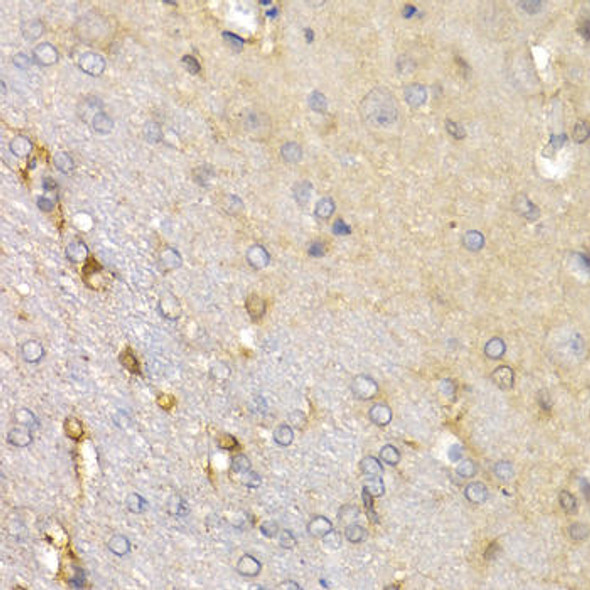
SFRP2 Rabbit Polyclonal Antibody (CAB5383)
Developmental Biology


Anti-HSP70 Antibody

Anti-ATG7 Antibody

Anti-KRAS Antibody

