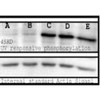
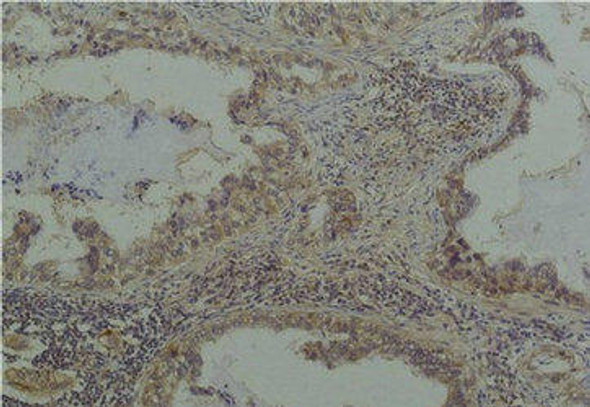
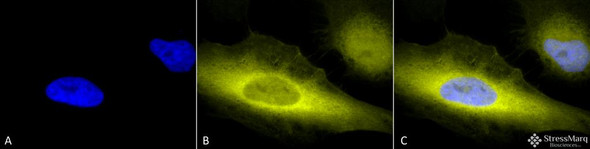
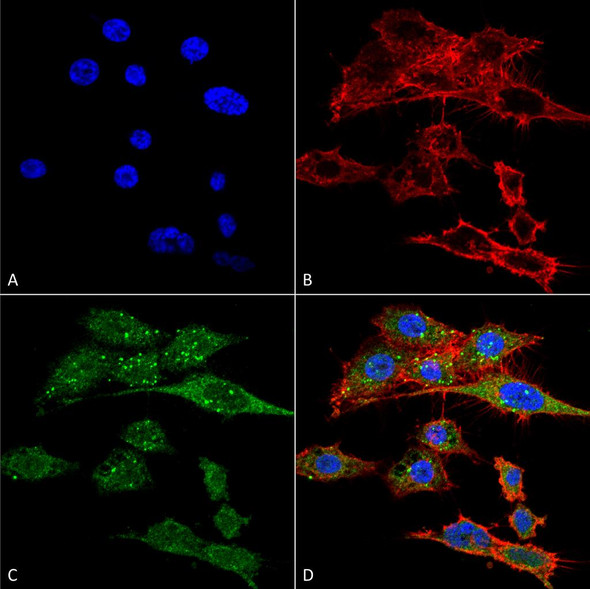
Phosphoserine Antibody is a rabbit polyclonal antibody directed against Phosphoserine, offered by Assay Genie for research applications. Reported applications include WB, IHC, ICC/IF, IP and ELISA. Reactivity is species independent. Purified by Peptide Affinity.
Phosphoserine is a post-translationally modified form of the amino acid serine, resulting from phosphorylation by serine/threonine kinases. This modification plays a critical role in regulating protein function, localization, and interactions, particularly in the central nervous system. In neurons, phosphoserine is involved in signal transduction, synaptic plasticity, and cytoskeletal dynamics. Aberrant serine phosphorylation has been implicated in the pathogenesis of neurodegenerative diseases such as Alzheimer’s, Parkinson’s, and ALS. For example, hyperphosphorylation of tau protein at serine residues contributes to neurofibrillary tangle formation and neuronal dysfunction in Alzheimer’s disease. Phosphoserine also modulates the activity of transcription factors, ion channels, and enzymes involved in oxidative stress responses and apoptosis. As a dynamic and reversible modification, it offers a promising target for therapeutic intervention and biomarker development in neurodegeneration. This antibody is also available conjugated to ATTO 390, ATTO 488, ATTO 594, Biotin and FITC. Supplied in 400 µl. For research use only; not for diagnostic or therapeutic procedures.
Rab4 AntibodyRab4 Antibody is a rabbit polyclonal antibody directed against Rab4, offered by Assay Genie for research applications. Reported applications include WB, IHC and ICC/IF. Reported...
Ubiquitin AntibodyUbiquitin Antibody is a rabbit polyclonal antibody directed against Ubiquitin, offered by Assay Genie for research applications. Reported applications include WB, IHC, ICC/IF and IP...
Rubicon AntibodyRubicon Antibody is a rabbit polyclonal antibody directed against Rubicon, offered by Assay Genie for research applications. Reported applications include WB, ICC/IF and IHC. Reported...