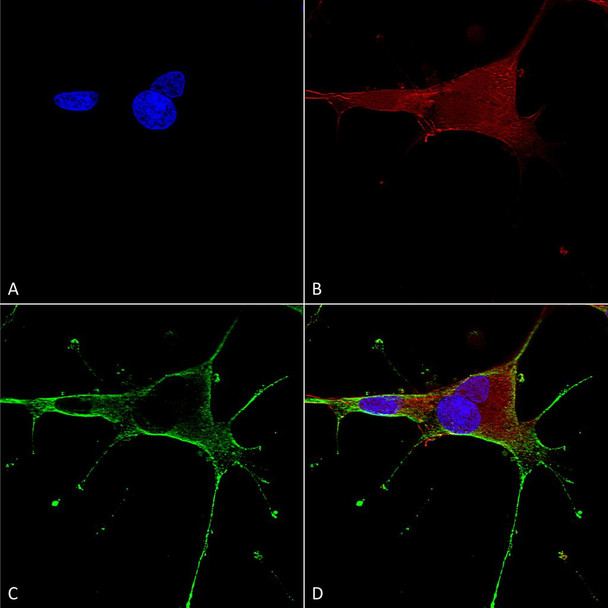
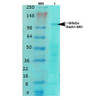
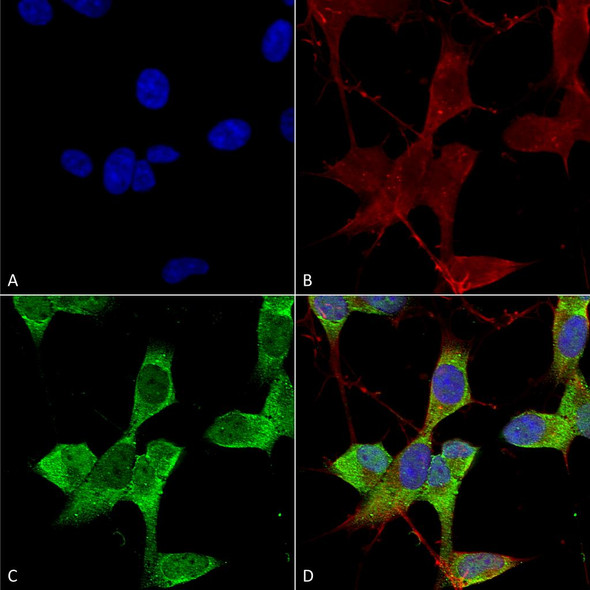
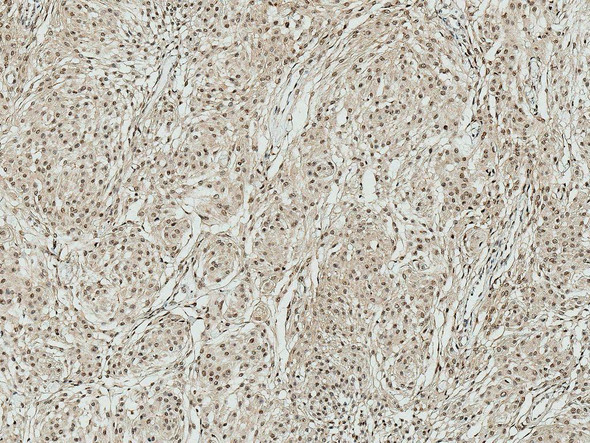
GluN1 Antibody [N308/48] is a mouse monoclonal antibody directed against GluN1, offered by Assay Genie for research applications. Reported applications include WB, IHC and ICC/IF. Reported reactivity: Human, Mouse and Rat. Supplied as IgG1, purified by Protein G.
The N-methyl-D-aspartate receptor (NMDA receptor or NMDAR) is a glutamate-gated ion channel essential for synaptic plasticity, learning, and memory. Central to its function is the GluN1 subunit, encoded by the GRIN1 gene, which is an obligatory component of all functional NMDAR complexes. Each receptor is a heterotetramer typically composed of two GluN1 subunits and two regionally expressed GluN2 (A-D) subunits. The GluN1 subunit not only anchors the receptor’s core structure but also modulates its biophysical and pharmacological properties through alternative splicing, generating multiple isoforms with distinct functional profiles. GluN1’s ubiquitous expression and essential role in receptor assembly make it a focal point in neuroscience and neurodegenerative disease research. Dysregulation of GluN1 expression or splicing has been implicated in a range of neurological disorders, including Alzheimer’s disease, Huntington’s disease, and schizophrenia. Additionally, GluN3 subunits (A and B), which can co-assemble with GluN1, exert inhibitory effects on receptor activity, further influencing disease-relevant signaling pathways. Understanding GluN1’s molecular diversity and regulatory mechanisms is critical for developing targeted therapies aimed at restoring NMDAR function in neurodegenerative and neuropsychiatric conditions. This antibody is also available conjugated to ATTO 390, ATTO 488, ATTO 594, APC, Biotin, FITC, HRP, PerCP and RPE. Supplied in 100 µg. For research use only; not for diagnostic or therapeutic procedures.
GRIN1, GluN1, Glutamate [NMDA] receptor subunit zeta-1, Glutamate receptor ionotropic N methyl D aspartate 1, MRD8, Methyl-D-aspartate receptor subunit zeta-1, N methyl D aspartate receptor, N methyl D aspartate receptor channel subunit zeta 1, N methyl D aspartate receptor subunit NR1, NMD-R1, NMDA 1, NMDA R1, NMDA Receptor 1, NMDA1, NMDAR, NMDAR1, NMDZ1_HUMAN, NR1
References:
1. Li F., and Tsien J.Z. (2009) New England J. Medicine. 361: 302-303. 2. Garcia-Gallo M., Renart J., Diaz-Guerra M. (2001) Biochem J. 356: 539-547. 3. Atlason P.T., Garside M.L., Meddows E., Whiting P., McIllhinney R.A.J. (2007) J Biol Chem. 282(35): 25299-25307.
TASK-1 Antibody [N374/48 (Formerly sold as S374-48)]TASK-1 Antibody [N374/48 (Formerly sold as S374-48)] is a mouse monoclonal antibody directed against TASK-1, offered by Assay Genie for research...
HSP70 AntibodyHSP70 Antibody is a chicken polyclonal antibody directed against HSP70, offered by Assay Genie for research applications. Reported applications include WB, ICC/IF and ELISA. Reported...
ATG7 AntibodyATG7 Antibody is a rabbit polyclonal antibody directed against ATG7, offered by Assay Genie for research applications. Reported applications include WB, ICC/IF and IHC. Reported...
KRAS AntibodyKRAS Antibody is a rabbit polyclonal antibody directed against KRAS, offered by Assay Genie for research applications. Reported applications include WB. Reported reactivity: Rat...
CCR2 AntibodyCCR2 Antibody is a rabbit polyclonal antibody directed against CCR2, offered by Assay Genie for research applications. Reported applications include WB and IHC. Reported reactivity:...