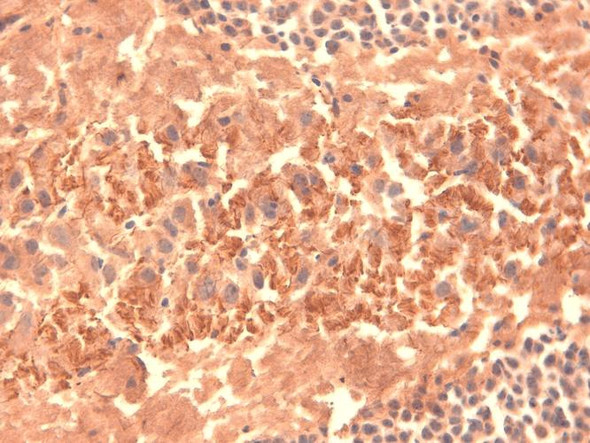
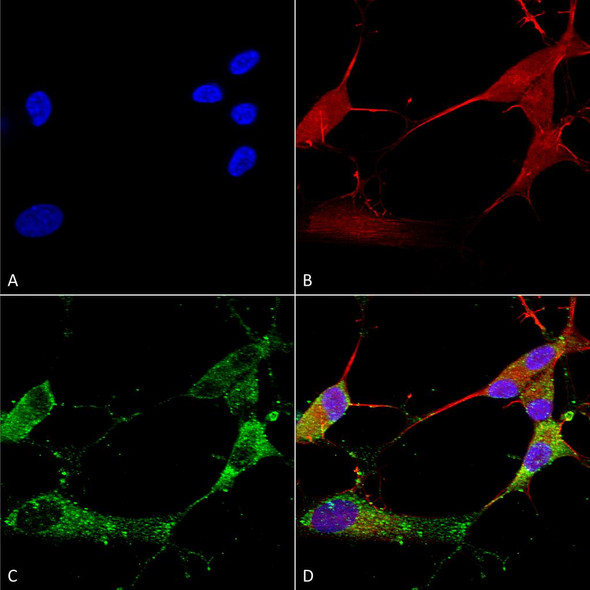
KCC2 Antibody [N1/12 (Formerly sold as S1-12)] is a mouse monoclonal antibody directed against KCC2, offered by Assay Genie for research applications. Reported applications include WB, IHC, ICC/IF and IP. Reported reactivity: Human, Mouse and Rat. Supplied as IgG2a, purified by Protein G.
KCC2 (potassium-chloride cotransporter 2) is a neuron-specific member of the cation-chloride cotransporter family, essential for maintaining low intracellular chloride concentrations. By leveraging potassium gradients, KCC2 facilitates chloride extrusion, enabling hyperpolarizing GABAergic inhibition—a cornerstone of neuronal stability and synaptic precision. Highly expressed throughout the central nervous system, KCC2 is enriched at inhibitory synapses, particularly in the spinal cord and brain. Its function is critical for establishing the inhibitory tone required for proper motor control, sensory processing, and cognitive function. Disruption of KCC2 activity alters chloride homeostasis, leading to depolarizing GABA responses and impaired inhibitory signaling. Animal studies have demonstrated that KCC2 deficiency results in severe neurological phenotypes, including motor dysfunction, epilepsy, and anxiety-like behaviors. These findings underscore KCC2’s pivotal role in maintaining excitatory-inhibitory balance and highlight its relevance in the pathogenesis of neurodegenerative and neurodevelopmental disorders. In conditions such as Alzheimer’s disease, amyotrophic lateral sclerosis (ALS), and traumatic brain injury, KCC2 downregulation contributes to neuronal hyperexcitability and excitotoxicity. As a result, KCC2 has emerged as a promising therapeutic target. Pharmacological and genetic strategies aimed at enhancing KCC2 function are being actively explored to restore inhibitory signaling and protect against neurodegeneration. KCC2’s central role in chloride regulation, synaptic inhibition, and disease progression positions it as a key focus in neuroscience and neurotherapeutic research. This antibody is also available conjugated to ATTO 390, ATTO 488, ATTO 594, APC, Biotin, FITC, HRP, PerCP and RPE. Supplied in 100 µg. For research use only; not for diagnostic or therapeutic procedures.
Product Name:
KCC2 Antibody [N1/12 (Formerly sold as S1-12)]
Product SKU:
STMA00107
Size:
100 µg
Target:
KCC2
Host Species:
Mouse
Antibody Type:
Monoclonal
Clone ID:
N1/12 (Formerly sold as S1-12)
Research Areas:
Neuroscience, Pumps/Transporters, Ion Pumps/Transporters
Buffer:
PBS pH7.4, 50% glycerol, 0.09% sodium azide
Storage & Shipping:
Store at -20°C. Shipped on Blue Ice or 4°C. Conjugated variants should be stored according to the product label.
Format:
Liquid
Applications:
WB, IHC, ICC/IF, IP
Antibody Isotype:
IgG2a
Purification:
Protein G Purified
Concentration:
1 mg/ml
Reactivity:
Human, Mouse, Rat
Recommended Dilution:
WB (1:1000), IHC (1:300), ICC/IF (1:100); optimal dilutions for assays should be determined by the user.
Specificity:
Detects ~140kDa.
Guarantee:
12 months from date of dispatch
Immunogen:
Fusion protein amino acids 932-1043 corresponding to rat KCC2
Immunogen Species:
Rat
Accession Number:
NP_599190
Gene ID:
2369-03-14 00:00:00
Swiss-Prot:
Q63633
Cellular Localization:
Membrane
Alternative Names:
KCC2, KCC 2, rKCC2, hKCC2, SLC12A5, S12A5, KIAA1176, Solute carrier family 12 member 5, Solute carrier family 12 (potassium chloride transporter) member 5, Potassium chloride transporter 5, Electroneutral potassium-chloride cotransporter 2, Electroneutral potassium chloride cotransporter 2, Furosemide-sensitive K-Cl cotransporter, Furosemide sensitive K Cl cotransporter, K-Cl cotransporter 2, Neuronal K-Cl cotransporter, Neuronal K Cl cotransporter, Erythroid K Cl cotransporter 2, Potassium Chloride Cotransporter, GRP78_HUMAN
References:
1. Lee L.H., Walker J.A., Williams J.R., Goodier R.J., Payne J.A., Moss S.J. (2007) J Biol Chem. 282(41): 29777-29784. 2. Watanabe M., Wake H., Moorhouse A.J., Nabekura J. (2009) J Biol Chem. 284(41): 27980-27988. 3. Gulyas A.I., Sik A., Payne J.A., Kaila K., Freund T.F. (2001) Eur J Neurosci. 13(12): 2205-2217. 4. Vinay L., Jean-Xavier C. (2008) Brain Res Rev. 57(1): 103-110.
Sulfotyrosine Antibody [12B11 (Formerly sold as 7C5)]Sulfotyrosine Antibody [12B11 (Formerly sold as 7C5)] is a mouse recombinant monoclonal antibody directed against Sulfotyrosine, offered by Assay...
HCN4 Antibody [N114/10 (Formerly sold as S114-10)]HCN4 Antibody [N114/10 (Formerly sold as S114-10)] is a mouse recombinant monoclonal antibody directed against HCN4, offered by Assay Genie for...
Stargazin Antibody [N245/36 (Formerly sold as S245-36)]Stargazin Antibody [N245/36 (Formerly sold as S245-36)] is a mouse monoclonal antibody directed against Stargazin, offered by Assay Genie for...
TRPC7 Antibody [N64A/36 (Formerly sold as S64A-36)]TRPC7 Antibody [N64A/36 (Formerly sold as S64A-36)] is a mouse monoclonal antibody directed against TRPC7, offered by Assay Genie for research...
MMP9 Antibody [L51/82 (Formerly sold as S51-82)]MMP9 Antibody [L51/82 (Formerly sold as S51-82)] is a mouse monoclonal antibody directed against MMP9, offered by Assay Genie for research applications...



![Western blot of rat brain lysate showing detection of ~55 kDa TARP Gamma2-4-8 protein using Anti-Tarp Gamma2-4-8 antibody [N245/36] (STMA00130). Lane 1: MW ladder. Lane 2: Anti-TARP Gamma2-4-8 (1:100). Lane 3: Anti-TARP Gamma2-4-8 (1:250). Lane 4: Anti-TARP Gamma2-4-8 (1:500). Lane 5: Anti-TARP Gamma2-4-8 (1:1000). Load: 20 µg RB lysate per lane. Block: 5% milk + TBST 1hr at RT.](https://cdn11.bigcommerce.com/s-rd6ounxcu2/images/stencil/590x590/products/120479/135398/anti-stargazin-antibody-n24536-formerly-sold-as-s245-36__80044__76509.1786858164.jpg?c=1 "Western blot of rat brain lysate showing detection of ~55 kDa TARP Gamma2-4-8 protein using Anti-Tarp Gamma2-4-8 antibody [N245/36] (STMA00130). Lane 1: MW ladder. Lane 2: Anti-TARP Gamma2-4-8 (1:100). Lane 3: Anti-TARP Gamma2-4-8 (1:250). Lane 4: Anti-TARP Gamma2-4-8 (1:500). Lane 5: Anti-TARP Gamma2-4-8 (1:1000). Load: 20 µg RB lysate per lane. Block: 5% milk + TBST 1hr at RT.")


