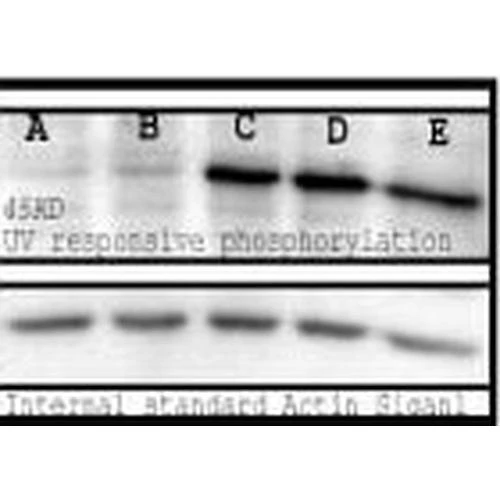
Anti-AHA1 Antibody

- SKU:
- STPA00032
- Antibody Type:
- Polyclonal
- Applications:
- WB
- Applications:
- IHC
- Applications:
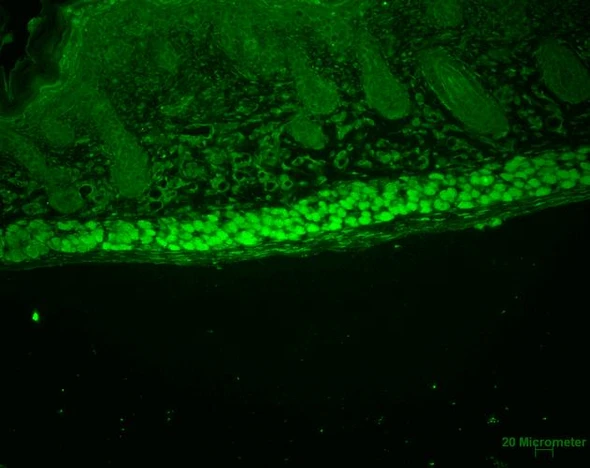
- ICC/IF
- Applications:
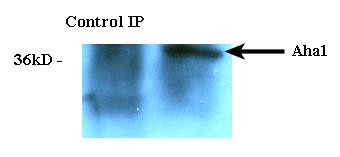
- IP
- Applications:
- ELISA
- Reactivity:
- Human
- Reactivity:
- Mouse
- Reactivity:
- Rat
- Host Species:
- Rabbit


Description
AHA1 Antibody
AHA1 Antibody is a rabbit polyclonal antibody directed against AHA1, offered by Assay Genie for research applications. Reported applications include WB, IHC, ICC/IF, IP and ELISA. Reported reactivity: Human, Mouse and Rat. Purified by Protein A.
Activator of HSP90 ATPase Homolog 1 (AHA1) is a critical member of the HSP90 co-chaperone family, known for its role in regulating protein folding and stability. AHA1 enhances the ATPase activity of HSP90, a central molecular chaperone, by competitively displacing other co-chaperones such as p23, thereby accelerating the chaperone cycle and influencing client protein maturation. AHA1 is implicated in endoplasmic reticulum (ER) to Golgi trafficking, a process essential for proper protein sorting and cellular homeostasis. It also interacts with HSP90 (HSPCA) and the cytoplasmic tail of vesicular stomatitis virus glycoproteins (VSV G), suggesting a broader role in viral pathogenesis and intracellular transport mechanisms. Importantly, AHA1 is widely expressed across multiple tissues, including the brain, heart, skeletal muscle, and kidney, with lower expression levels observed in the liver and placenta. Its presence in the central nervous system highlights its potential relevance in neurodegenerative disease pathways, where protein misfolding and aggregation are hallmark features. Emerging evidence suggests that targeting AHA1 may enhance the efficacy of HSP90 inhibitors, positioning it as a promising therapeutic co-target in diseases characterized by proteostasis imbalance, such as Alzheimer’s disease, Parkinson’s disease, and Huntington’s disease. This antibody is also available conjugated to ATTO 390, ATTO 488, ATTO 594, APC, Biotin, FITC, HRP, PerCP and RPE. Supplied in 100 µl. For research use only; not for diagnostic or therapeutic procedures.
| Product Name: | AHA1 Antibody |
| Product SKU: | STPA00032 |
| Size: | 100 µl |
| Target: | AHA1 |
| Host Species: | Rabbit |
| Antibody Type: | Polyclonal |
| Research Areas: | Cancer, Heat Shock, Cell Signaling, Protein Trafficking, Chaperone Proteins |
| Buffer: | PBS pH7.4, 50% glycerol, 0.09% sodium azide |
| Storage & Shipping: | Store at -20°C. Shipped on Blue Ice or 4°C. Conjugated variants should be stored according to the product label. |
| Format: | Liquid |
| Applications: | WB, IHC, ICC/IF, IP, ELISA |
| Purification: | Protein A Purified |
| Concentration: | 1 mg/ml |
| Reactivity: | Human, Mouse, Rat |
| Recommended Dilution: | WB (1:1000), ICC/IF (1:60); optimal dilutions for assays should be determined by the user. |
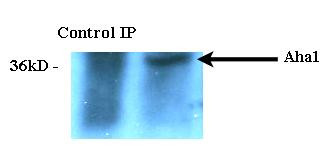
| Specificity: | Detects ~ 38kDa. |
| Guarantee: | 12 months from date of dispatch |
| Immunogen: | Recombinant Full Length Mouse Aha1 Protein |
| Immunogen Species: | Mouse |
| Accession Number: | NP_666148.1 |
| Gene ID: | 217737 |
| Swiss-Prot: | Q8BK64 |
| Cellular Localization: | Cytoplasm | Endoplasmic Reticulum |
| Alternative Names: | AHSA1, AHA1, HSPC322, p38, C14orf3, LOC10598, Activator of Hsp90 ATPase activity 1, Activator of 90 kDa heat shock protein ATPase homolog 1 |
| References: | 1. Hainzl O., Lapina M.C., Buchner J., Richter K. (2009) J Biol Chem. Epub. 2. Harst A., Lin H., Obermann W.M. (2005) Biochem J. 387 (pt.3): 789-796. 3. Lotz G.P., Brychzy A., Heinz S., Obermann W.M. (2008) J Cell Sci. 121(pt.5): 717-723. 4. Holmes J.L., Sharp S.Y., Hobbs S., Workman P. (2008) Cancer Res. 68(4): 1188-1197. |
| Note: | For research use only. |
Related Products

Anti-AHA1 Antibody [25F2.D10]
Anti-AHA1 Antibody [25F2.D9]
![Anti-AHA1 [R01-8D9] Monoclonal Antibody (AGMB01986)](https://cdn11.bigcommerce.com/s-rd6ounxcu2/images/stencil/590x590/products/113936/127978/anti-aha1-r01-8d9-monoclonal-antibody-agmb01986__46395__97052.1786841164.jpg?c=1 "Anti-AHA1 [R01-8D9] Monoclonal Antibody (AGMB01986)")
AHA1 Rabbit Monoclonal Antibody (CAB9538)
Immunology Antibodies 3