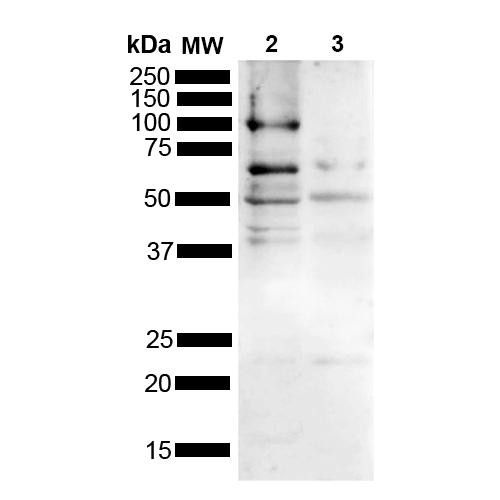
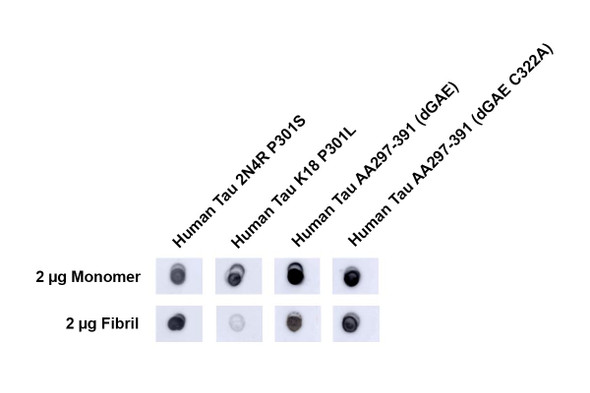
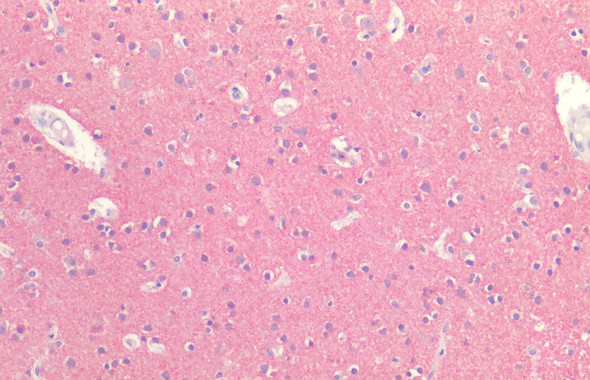
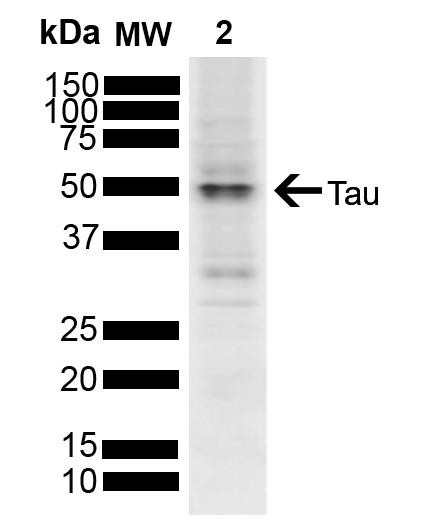
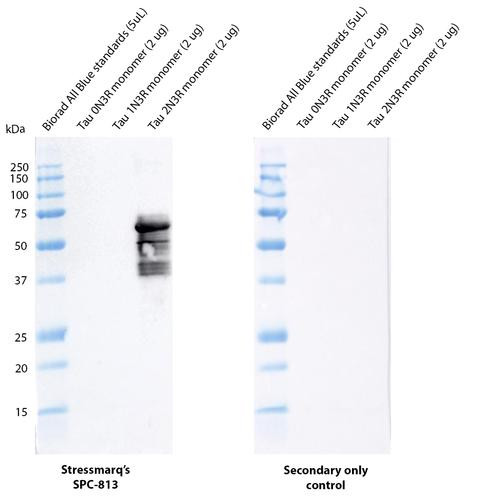
Tau Antibody (pThr217) [15B7] is a mouse monoclonal antibody directed against Tau Antibody (pThr217), offered by Assay Genie for research applications. Reported applications include WB and DB. Reported reactivity: Human, Mouse and Rat. Supplied as IgG1 Kappa, purified by Protein G.
Tau, encoded by the MAPT gene, is a microtubule-associated protein critical for maintaining neuronal structure and axonal transport. The MAPT transcript undergoes complex alternative splicing, producing six isoforms in the adult human brain. These isoforms are differentially expressed depending on neuronal type and developmental stage, reflecting tau’s dynamic role in neural function. In neurodegenerative diseases such as Alzheimer’s disease (AD), tau becomes abnormally phosphorylated, leading to its detachment from microtubules and aggregation into neurofibrillary tangles. Among the many phosphorylation sites, threonine 217 (pThr217) has emerged as a highly specific and early biomarker of AD pathology. Phosphorylation at Thr217 correlates strongly with amyloid-β burden and cognitive decline, making it a valuable target for early diagnosis and disease monitoring. Unlike other phospho-tau epitopes, pThr217 shows high diagnostic accuracy in cerebrospinal fluid and plasma, and is increasingly used in biomarker panels for AD. Tau (pThr217) provides insight into the molecular mechanisms driving tauopathy progression. Its specificity and accessibility make it a promising candidate for therapeutic targeting and longitudinal tracking in neurodegenerative disease research. This antibody is also available conjugated to ATTO 390, ATTO 488, ATTO 594, APC, Biotin, FITC, HRP, PerCP and RPE. Supplied in 100 µg. For research use only; not for diagnostic or therapeutic procedures.