Rhodopsin Antibody [1D4] is a mouse monoclonal antibody directed against Rhodopsin, offered by Assay Genie for research applications. Reported applications include WB, IHC, ICC/IF, IP and ELISA. Reported reactivity: Vertebrate. Supplied as IgG1, purified by Protein G.
Rhodopsin is a light-sensitive G protein-coupled receptor (GPCR) found in the rod photoreceptor cells of the retina. It plays a central role in the phototransduction cascade, converting light into electrical signals essential for vision in low-light conditions. Beyond its classical role in visual processing, rhodopsin has emerged as a key player in retinal neurodegeneration. Mutations in the RHO gene encoding rhodopsin are a leading cause of autosomal dominant retinitis pigmentosa (adRP), a progressive neurodegenerative disorder characterized by photoreceptor cell death and vision loss. Misfolded rhodopsin accumulates in the endoplasmic reticulum, triggering cellular stress responses, including the unfolded protein response (UPR) and apoptosis. Rhodopsin dysfunction also affects mitochondrial dynamics, oxidative stress regulation, and autophagy—pathways commonly implicated in broader neurodegenerative diseases such as Alzheimer’s and Parkinson’s. Its involvement in protein misfolding and trafficking makes rhodopsin a valuable model for studying proteostasis and neurodegeneration. As a well-characterized GPCR with known structural and functional properties, rhodopsin serves as a powerful tool for investigating the molecular mechanisms underlying neuronal survival, degeneration, and therapeutic intervention strategies in neurodegenerative research. This antibody is also available conjugated to ATTO 390, ATTO 488, ATTO 594, APC, Biotin, FITC, HRP, PerCP and RPE. Supplied in 100 µg. For research use only; not for diagnostic or therapeutic procedures.
Store at -20°C. Shipped on Blue Ice or 4°C. Conjugated variants should be stored according to the product label.
Format:
Liquid
Applications:
WB, IHC, ICC/IF, IP, ELISA
Antibody Isotype:
IgG1
Purification:
Protein G Purified
Concentration:
1 mg/ml
Reactivity:
Vertebrate
Recommended Dilution:
WB (1:1000), IHC (1:100); optimal dilutions for assays should be determined by the user.
Specificity:
Detects ~40kDa. Recognizes Rhodopsin (native and recombinant forms). No known reactivity to other proteins. Binds specifically to the C-terminal epitope -T-E-T-S-Q-V-A-P-A-(COOH).
1. Molday R.S., Hicks D., and Molday L. (1987) Invest Ophthalmol Vis Sci. 28: 50-61. 2. Ridge K.D., Lee S.S.J., and Abdulaev N.G. (1996) J of Biol Chem. 271: 7860-7867. 3. Matsuyama T., Yamashita T., Imai H. and Shichida Y. (2009) J Biol Chem. Manuscript M109.063875. 4. Feurstein S.E., et al. (2009) Biochemistry. 48(45): 10733-10742. 5. Iannaccone A., et al. (2006) Vision Res. 46(27): 4556-4567.


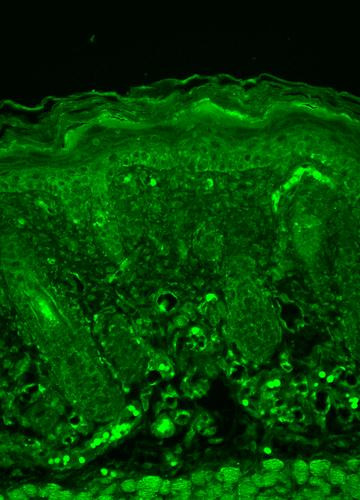
![Anti-SIRT2 (1D4) [1D4-H11-H11] Monoclonal Antibody (AGMB04208)](https://cdn11.bigcommerce.com/s-rd6ounxcu2/images/stencil/590x590/products/116158/130197/anti-sirt2-1d4-1d4-h11-h11-monoclonal-antibody-agmb04208__70962__30040.1786846883.jpg?c=1 "Anti-SIRT2 (1D4) [1D4-H11-H11] Monoclonal Antibody (AGMB04208)")
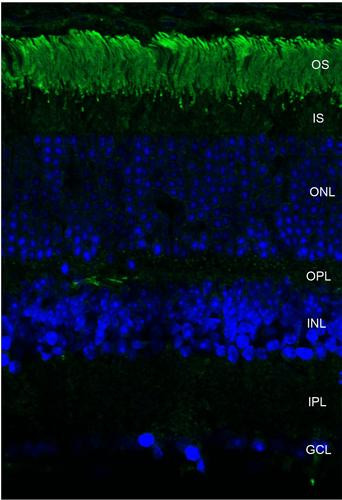

![Anti-Rhodopsin [R06-1G9] Monoclonal Antibody (AGMB02870)](https://cdn11.bigcommerce.com/s-rd6ounxcu2/images/stencil/590x590/products/114822/128856/anti-rhodopsin-r06-1g9-monoclonal-antibody-agmb02870__60985__93014.1786843457.jpg?c=1 "Anti-Rhodopsin [R06-1G9] Monoclonal Antibody (AGMB02870)")
![Anti-Cytokeratin 19 [R07-1D4] Monoclonal Antibody (AGMB02085)](https://cdn11.bigcommerce.com/s-rd6ounxcu2/images/stencil/590x590/products/114034/128077/anti-cytokeratin-19-r07-1d4-monoclonal-antibody-agmb02085__76076__46623.1786841424.jpg?c=1 "Anti-Cytokeratin 19 [R07-1D4] Monoclonal Antibody (AGMB02085)")
![Anti-67kDa Laminin Receptor [R01-1D4] Monoclonal Antibody (AGMB01974)](https://cdn11.bigcommerce.com/s-rd6ounxcu2/images/stencil/590x590/products/113925/127965/anti-67kda-laminin-receptor-r01-1d4-monoclonal-antibody-agmb01974__56650__62320.1786841140.jpg?c=1 "Anti-67kDa Laminin Receptor [R01-1D4] Monoclonal Antibody (AGMB01974)")