
Anti-NCC Antibody
- SKU:
- STPA00046
- Antibody Type:
- Polyclonal
- Applications:
- WB
- Applications:
- IHC
- Applications:
- ICC/IF
- Applications:
- IEM
- Reactivity:
- Human
- Reactivity:
- Mouse
- Reactivity:
- Rat
- Reactivity:
- Dog
- Host Species:
- Rabbit



Description
NCC Antibody
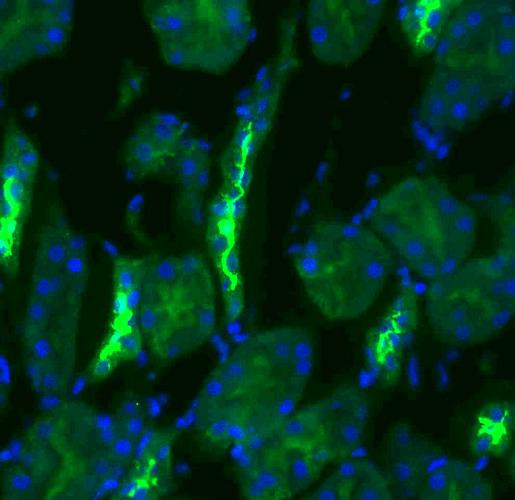
NCC Antibody is a rabbit polyclonal antibody directed against NCC, offered by Assay Genie for research applications. Reported applications include WB, IHC, ICC/IF and IEM. Reported reactivity: Human, Mouse, Rat and Dog. Purified by Affinity.
The Na⁺-Cl⁻ co-transporter (NCC), primarily expressed in the distal convoluted tubule of the kidney, is a thiazide-sensitive transporter critical for sodium and chloride reabsorption. While traditionally studied in renal physiology and hypertension, emerging evidence suggests that NCC may also play a role in neurodegenerative disease through its influence on systemic electrolyte balance and neuronal excitability. NCC is activated by phosphorylation and regulated by signaling pathways involving SGK1 and WNK kinases. Dysregulation of NCC activity can alter extracellular potassium and sodium levels, indirectly affecting neuronal membrane potential and synaptic transmission. Additionally, NCC expression has been detected in non-renal tissues, including the lens and possibly the brain, suggesting broader physiological roles. In neurodegenerative contexts, electrolyte imbalance and altered ion transport are known contributors to neuronal dysfunction and glial activation. NCC-mediated sodium handling may influence neuroinflammatory responses and oxidative stress, particularly in conditions such as Alzheimer’s disease and vascular dementia. Furthermore, thiazide diuretics targeting NCC have been associated with cognitive effects, underscoring the transporter’s potential relevance in brain health. Understanding NCC’s extrarenal functions may reveal novel mechanisms linking ion transport to neurodegeneration and offer new therapeutic avenues for modulating neuronal homeostasis. This antibody is also available conjugated to ATTO 390, ATTO 488, ATTO 594, APC, Biotin, FITC, HRP, PerCP and RPE. Supplied in 100 µg. For research use only; not for diagnostic or therapeutic procedures.
| Product Name: | NCC Antibody |
| Product SKU: | STPA00046 |
| Size: | 100 µg |
| Target: | NCC |
| Host Species: | Rabbit |
| Antibody Type: | Polyclonal |
| Research Areas: | Cancer, Neuroscience, Pumps/Transporters, Ion Pumps/Transporters |
| Buffer: | PBS, 50% glycerol, 0.09% sodium azide |
| Storage & Shipping: | Store at -20°C. Shipped on Blue Ice or 4°C. Conjugated variants should be stored according to the product label. |
| Format: | Liquid |
| Applications: | WB, IHC, ICC/IF, IEM |
| Purification: | Affinity Purified |
| Concentration: | 1 mg/ml |
| Reactivity: | Human, Mouse, Rat, Dog |
| Recommended Dilution: | WB (1:1000), IHC (1:200); optimal dilutions for assays should be determined by the user. |
| Specificity: | Detects ~160kDa. |
| Guarantee: | 12 months from date of dispatch |
| Immunogen: | Produced against a synthetic peptide mapping to a segment of rat NCC (amino acids 74-95), N-terminal |
| Immunogen Species: | Rat |
| Accession Number: | NP_062218, NP_000330 |
| Gene ID: | 54300, 6559 |
| Swiss-Prot: | P55018, P55017 |
| Cellular Localization: | Membrane |
| Alternative Names: | NCC, SLC12A3, SCYL1, CKb10, MCP-4, MGC17134, NCC-1, NCC1, SCYA13, CK-beta-10, Monocyte chemoattractant protein 4, Monocyte chemotactic protein 4, New CC chemokine 1, Small inducible cytokine A13, Small inducible cytokine subfamily A (Cys-Cys) member 13, Chemokine (C-C) |
| References: | 1. Vallon V., Schroth J, Lang F, Kuhl D and Uchida S. (2009) Am J Physiol Renal Physiol. 297(3): F704-712. 2. Tiwari S., et al. (2009) Am J Nephrol. 30(6): 554-562. 3. Chee K.N., Vorontsova I., Lim J.C., Kistler J. and Donaldson P.J. (2010) Mol Vis. 16:800-812. |
| Note: | For research use only. |
Related Products
FANCC Rabbit Polyclonal Antibody (CAB1812)
Epigenetics & Nuclear Signaling Antibodies 3


Anti-HSP70 Antibody

Anti-ATG7 Antibody

Anti-KRAS Antibody

