Kir6.1 Antibody [N366/60 (Formerly sold as S366-60)]
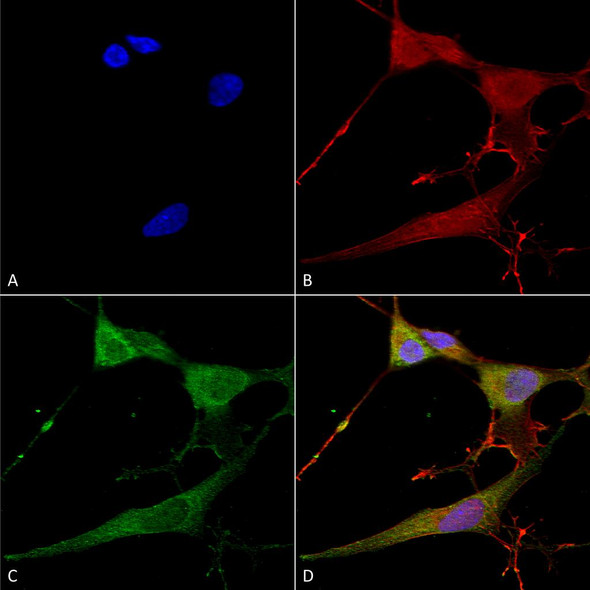
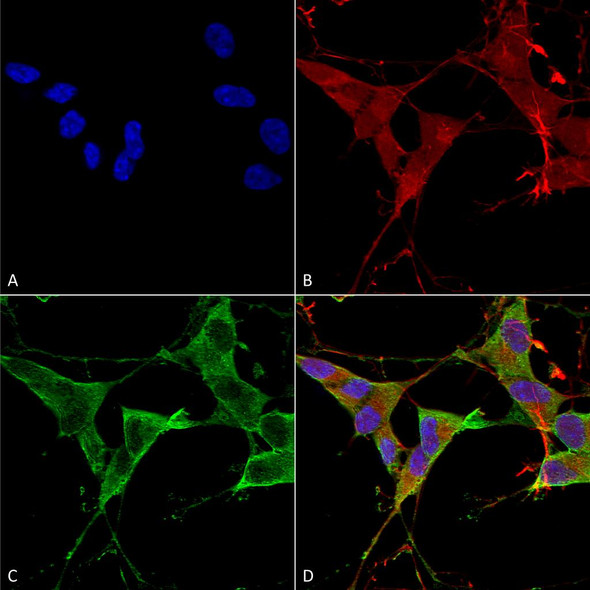
Kir6.1 Antibody [N366/60 (Formerly sold as S366-60)] is a mouse monoclonal antibody directed against Kir6.1, offered by Assay Genie for research applications. Reported applications include WB, IHC and ICC/IF. Reported reactivity: Human, Mouse and Rat. Supplied as IgG2A, purified by Protein G.
Kir6.1, encoded by the KCNJ8 gene, is a member of the inwardly rectifying potassium (Kir) channel family, which plays a critical role in regulating membrane potential and cellular excitability. Unlike voltage-gated potassium channels, Kir channels preferentially allow potassium ions to flow into the cell, stabilizing the resting membrane potential and modulating neuronal responsiveness. Kir6.1 is a key subunit of ATP-sensitive potassium (K_ATP) channels, which couple cellular metabolic state to electrical activity. While Kir6.1 is predominantly expressed in cardiac and smooth muscle tissues—including fetal and adult hearts—it is also present in the brain, where it contributes to neurovascular coupling and neuronal protection under metabolic stress. In the nervous system, Kir6.1-containing K_ATP channels are activated during conditions of energy depletion, such as ischemia or oxidative stress, helping to hyperpolarize neurons and reduce excitotoxicity. Dysregulation of Kir6.1 function has been implicated in neurodegenerative diseases, including stroke, Alzheimer’s disease, and Parkinson’s disease, where impaired energy metabolism and ionic imbalance are central pathological features. Furthermore, mutations in KCNJ8 have been associated with J-wave syndromes and other channelopathies, highlighting the broader physiological importance of Kir6.1 in excitable tissues. As research into metabolic regulation and ion channel dysfunction in neurodegeneration advances, Kir6.1 is emerging as a promising target for therapeutic intervention aimed at preserving neuronal function and preventing cell death. This antibody is also available conjugated to ATTO 390, ATTO 488, ATTO 594, APC, Biotin, FITC, HRP, PerCP and RPE. Supplied in 100 µg. For research use only; not for diagnostic or therapeutic procedures.
Product Name:
Kir6.1 Antibody [N366/60 (Formerly sold as S366-60)]
Product SKU:
STMA00170
Size:
100 µg
Target:
Kir6.1
Host Species:
Mouse
Antibody Type:
Monoclonal
Clone ID:
N366/60 (Formerly sold as S366-60)
Research Areas:
Neuroscience, Ion channels, Potassium Channels, Inward-Rectifying Potassium Channels, Cancer
Buffer:
PBS pH7.4, 50% glycerol, 0.1% sodium azide
Storage & Shipping:
Store at -20°C. Shipped on Blue Ice or 4°C. Conjugated variants should be stored according to the product label.
Format:
Liquid
Applications:
WB, IHC, ICC/IF
Antibody Isotype:
IgG2A
Purification:
Protein G Purified
Concentration:
1 mg/ml
Reactivity:
Human, Mouse, Rat
Recommended Dilution:
WB (1:1000), ICC/IF (1:100); optimal dilutions for assays should be determined by the user.
Specificity:
Detects ~45kDa.
Guarantee:
12 months from date of dispatch
Immunogen:
Fusion protein amino acids 306-424 (Cytoplasmic C-terminus) of rat Kir6.1
Sulfotyrosine Antibody [12B11 (Formerly sold as 7C5)]Sulfotyrosine Antibody [12B11 (Formerly sold as 7C5)] is a mouse recombinant monoclonal antibody directed against Sulfotyrosine, offered by Assay...
CavBeta2 Antibody [N8b/1 (Formerly sold as S8B-1)]CavBeta2 Antibody [N8b/1 (Formerly sold as S8B-1)] is a mouse monoclonal antibody directed against CavBeta2, offered by Assay Genie for research...
NrCAM Antibody [N364/51 (Formerly sold as S364-51)]NrCAM Antibody [N364/51 (Formerly sold as S364-51)] is a mouse monoclonal antibody directed against NrCAM, offered by Assay Genie for research...
LAR Antibody [N165/38 (Formerly sold as S165-38)]LAR Antibody [N165/38 (Formerly sold as S165-38)] is a mouse monoclonal antibody directed against LAR, offered by Assay Genie for research...
LRRK2 Antibody [N231B/34 (Formerly sold as S231B-34)]LRRK2 Antibody [N231B/34 (Formerly sold as S231B-34)] is a mouse monoclonal antibody directed against LRRK2, offered by Assay Genie for research...