Mitochondrial import inner membrane translocase subunit TIM14 (TIM14) is an essential component of the PAM complex. PAM complex is required for the translocation of transit peptide-containing proteins from the inner membrane into the mitochondrial matrix in an ATP-dependent manner. In the complex, TIM14 is required to stimulate activity of mtHSP70 (SSC1). TIM14 belongs to the DnaJ family, which has been involved in Hsp40/Hsp70 chaperone systems. As a mitochondrial chaperone, TIM14 functions as part of the TIM23 complex import motor to facilitate the import of nuclear-encoded proteins into the mitochondria. TIM14 also complexes with prohibitin complexes to regulate mitochondrial morphogenesis, and has been implicated in dilated cardiomyopathy with ataxia.
Product Name:
S. cerevisiae TIM14 Recombinant Protein (RPES4029)
Recombinant S. cerevisiae TIM14 is produced by our E.coli expression system and the target gene encoding Phe99-Lys168 is expressed.
Purity:
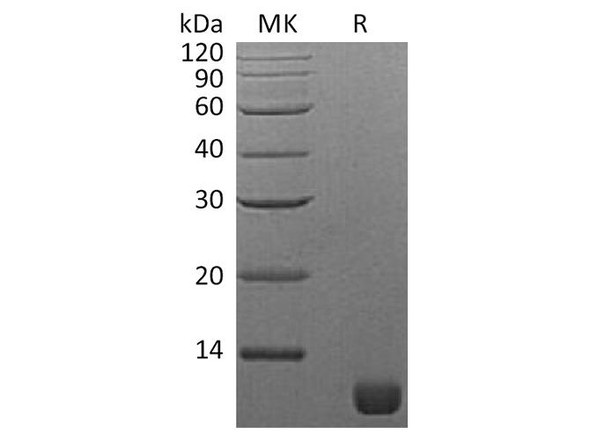
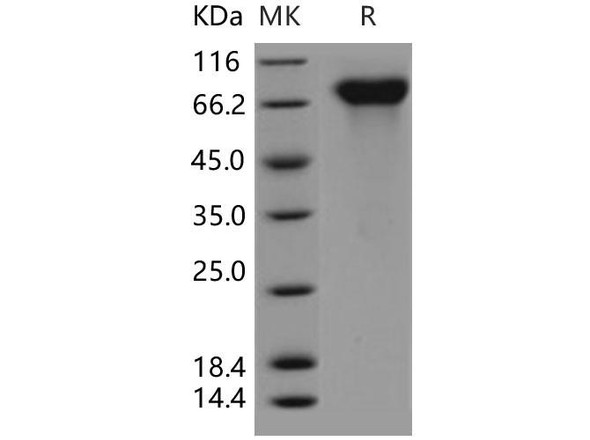
> 95% as determined by reducing SDS-PAGE.
Mol Mass:
7.9 kDa
AP Mol Mass:
9 kDa
Formulation:
Lyophilized from a 0.2 µm filtered solution of 20mM Tris, 300mM NaCl, pH8.0.
Shipping:
This product is provided as lyophilized powder which is shipped with ice packs.
Stability and Storage:
Lyophilized proteins are stable for up to 12 months when stored at -20 to -80°C. Reconstituted protein solution can be stored at 4-8°C for 2-7 days. Aliquots of reconstituted samples are stable at < -20°C for 3 months.