RET proto-oncogene; also known as RET; is a cell-surface molecule that transduce signals for cell growth and differentiation. It contains 1 cadherin domain and 1 protein kinase domain. RET proto-oncogene belongs to the protein kinase superfamily; tyr protein kinase family. RET proto-oncogene is involved in numerous cellular mechanisms including cell proliferation; neuronal navigation; cell migration; and cell differentiation upon binding with glial cell derived neurotrophic factor family ligands. It phosphorylates PTK2/FAK1 and regulates both cell death/survival balance and positional information. RET is required for the molecular mechanisms orchestration during intestine organogenesis; involved in the development of enteric nervous system and renal organogenesis during embryonic life; promotes the formation of Peyer's patch-like structures; modulates cell adhesion via its cleavage; involved in the development of the neural crest. RET proto-oncogene is active in the absence of ligand; triggering apoptosis. RET acts as a dependence receptor; in the presence of the ligand GDNF in somatotrophs (within pituitary); promotes survival and down regulates growth hormone (GH) production; but triggers apoptosis in absence of GDNF. It also regulates nociceptor survival and size; triggers the differentiation of rapidly adapting (RA) mechanoreceptors; mediated several diseases such as neuroendocrine cancers. Defects in RET may cause colorectal cancer; hirschsprung disease type 1; medullary thyroid carcinoma; multiple neoplasia type 2B; susceptibility to pheochromocytoma; multiple neoplasia type 2A; thyroid papillary carcinoma and congenital central hypoventilation syndrome.Immune Checkpoint Immunotherapy Cancer Immunotherapy Targeted Therapy
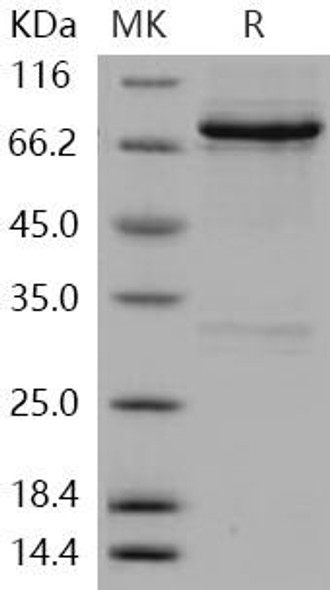
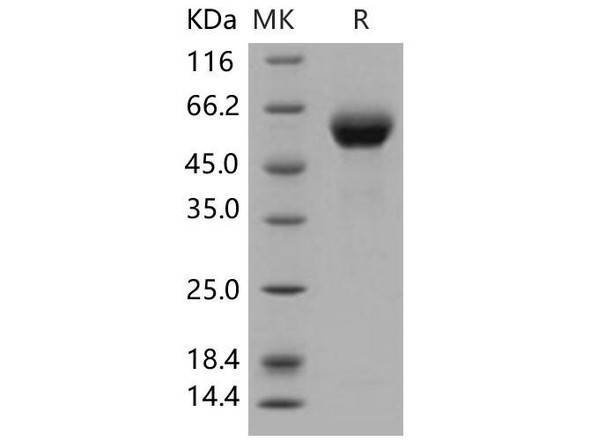
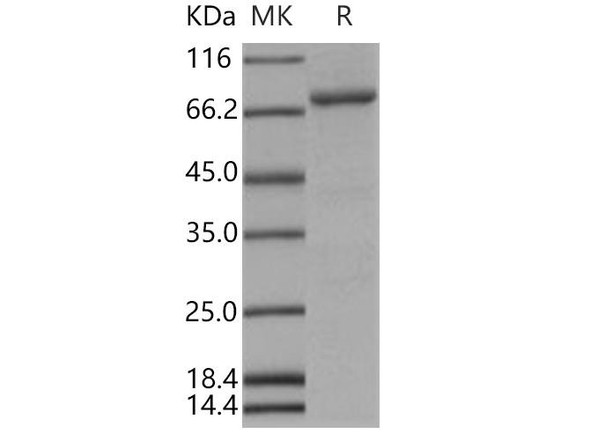
A DNA sequence encoding the extracellular domain of human RET (P07949-1) (Met 1-Arg 635) was fused with a polyhistidine tag at the N-terminus.
Purity:
> 92 % as determined by reducing SDS-PAGE.
Mol Mass:
69.1 kDa
AP Mol Mass:
110-120 kDa
Formulation:
Lyophilized from sterile PBS; pH 7.4
Shipping:
This product is provided as lyophilized powder which is shipped with ice packs.
Stability and Storage:
Lyophilized proteins are stable for up to 12 months when stored at -20 to -80°C. Reconstituted protein solution can be stored at 4-8°C for 2-7 days. Aliquots of reconstituted samples are stable at < -20°C for 3 months.