The cluster of differentiation (CD) system is a glycosyl phosphatidylinositol anchored membrane protein that belongs to the CD38 family.It is generally used in immunophynotyping. CD157 was discovered in a bone marrow stromal cell line where it facilitates pre-B-cell growth. CD157 is a bifunctional ectoenzyme that exhibits both ADP-ribosyl cyclase and cyclic ADP ribose hydrolase activities followed with CD38. It plays a role in rheumatoid arthritis (RA) due to its enhanced expression in RA-derived bone marrow stromal cell lines. Studies have shown that this protein have a role in predicted to function as a cell surface receptor and an immunoregulatory molecule.
Recombinant Human BST1 is produced by our Mammalian expression system and the target gene encoding Gly29-Lys292 is expressed with a 6His tag at the C-terminus.
Purity:
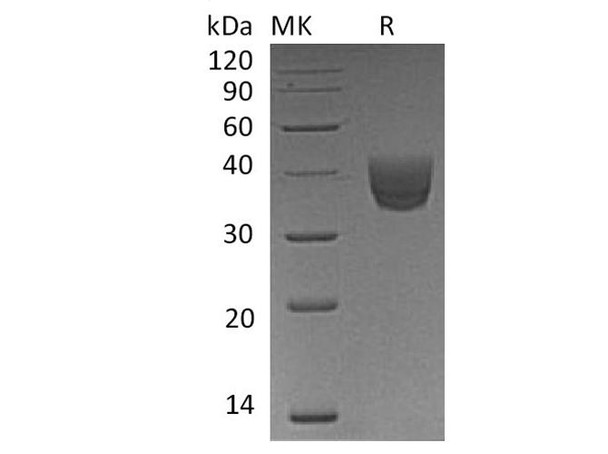
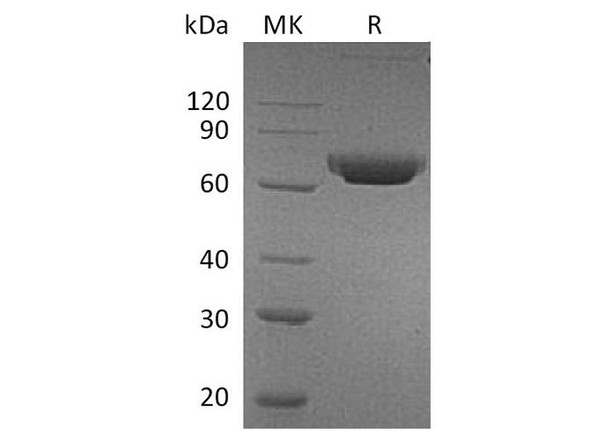
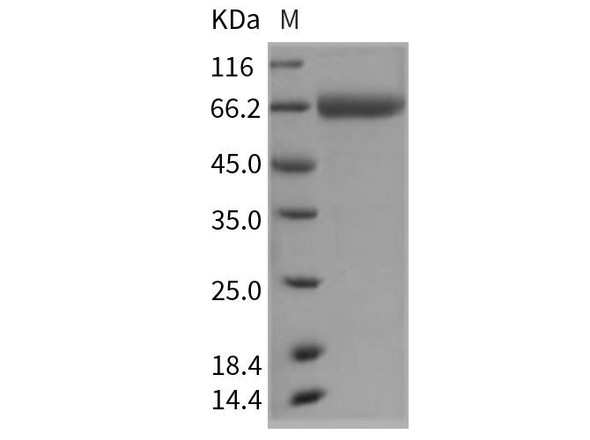
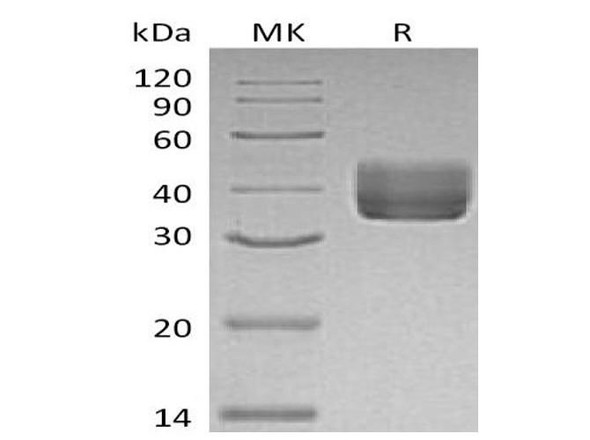
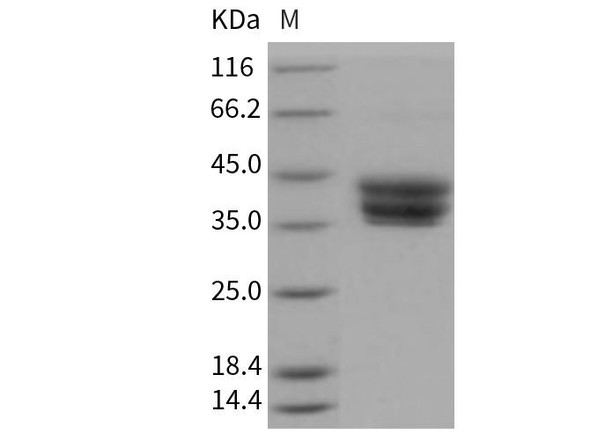
> 95% as determined by reducing SDS-PAGE.
Mol Mass:
30.8 kDa
AP Mol Mass:
37 kDa
Formulation:
Lyophilized from a 0.2 µm filtered solution of PBS; pH7.4.
Shipping:
This product is provided as lyophilized powder which is shipped with ice packs.
Stability and Storage:
Lyophilized proteins are stable for up to 12 months when stored at -20 to -80°C. Reconstituted protein solution can be stored at 4-8°C for 2-7 days. Aliquots of reconstituted samples are stable at < -20°C for 3 months.