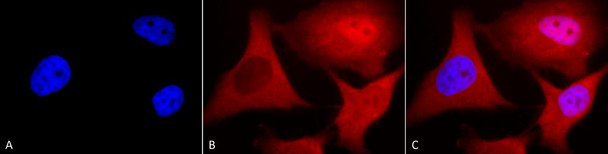
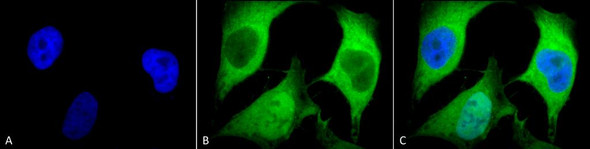
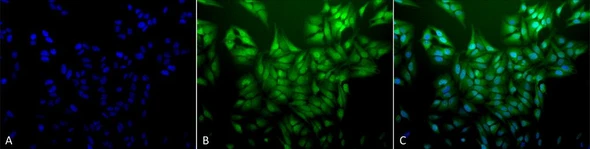
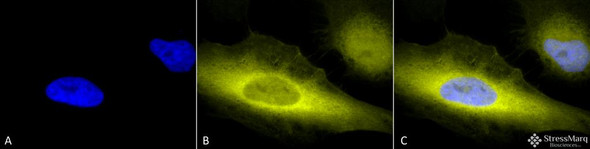
Ubiquitin Antibody [6C11-B3] is a mouse monoclonal antibody directed against Ubiquitin, offered by Assay Genie for research applications. Reported applications include WB, ICC/IF and ELISA. Reported reactivity: Human, Mouse, Rat and Bovine. Supplied as IgG2a Kappa, purified by Protein G.
Ubiquitin is a highly conserved, small regulatory protein that plays a pivotal role in maintaining cellular protein homeostasis through the ubiquitin-proteasome system (UPS) and autophagy pathways. By tagging damaged, misfolded, or excess proteins for degradation, ubiquitin ensures proper protein turnover and prevents toxic protein accumulation—an essential function in long-lived, post-mitotic neurons. In the context of neuroscience, ubiquitin is critically involved in synaptic plasticity, axonal transport, and neuronal survival. Dysregulation of ubiquitin signaling has been strongly implicated in the pathogenesis of major neurodegenerative diseases, including Alzheimer’s disease, Parkinson’s disease, Huntington’s disease, and amyotrophic lateral sclerosis (ALS). These disorders are often characterized by the accumulation of ubiquitin-positive protein aggregates, indicating a breakdown in proteostasis mechanisms. Multiple genes encode ubiquitin precursors, including UBB, UBC, UBA52, and RPS27A, each contributing to the dynamic regulation of ubiquitin pools in neurons. Mutations or altered expression in these genes, or in components of the UPS, can disrupt neuronal function and accelerate neurodegeneration. As a master regulator of protein quality control, ubiquitin is a key molecular target in neurodegenerative disease research. Understanding its signaling networks offers promising avenues for therapeutic intervention aimed at restoring proteostasis and halting disease progression. This antibody is also available conjugated to ATTO 390, ATTO 488, ATTO 594, APC, Biotin, FITC, HRP, PerCP and RPE. Supplied in 200 µg. For research use only; not for diagnostic or therapeutic procedures.