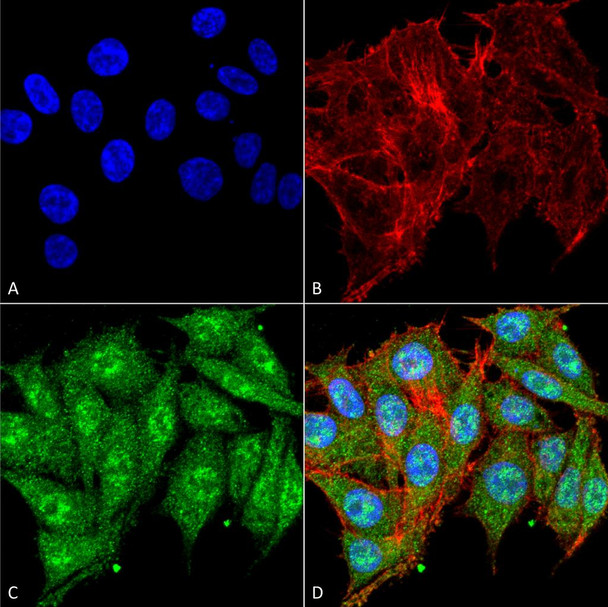
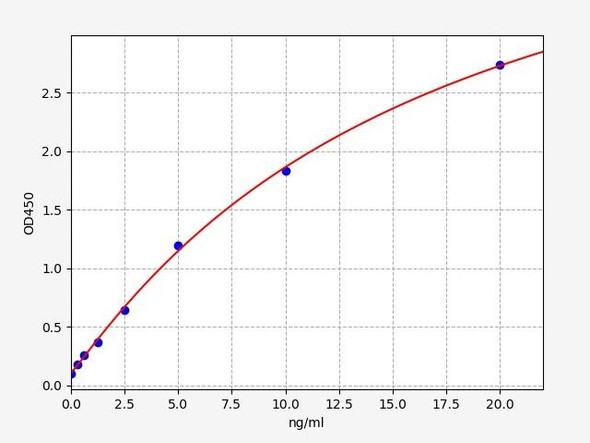
IGF-1 Antibody is a rabbit polyclonal antibody directed against IGF-1, offered by Assay Genie for research applications. Reported applications include WB, ICC/IF and IHC. Reported reactivity: Human and Mouse. Purified by Peptide Affinity.
Insulin-like Growth Factor 1 (IGF-1) is a peptide hormone structurally similar to insulin, playing a critical role in brain development, neuronal survival, and synaptic plasticity. Widely expressed in the central nervous system, IGF-1 exerts its effects through the IGF-1 receptor (IGF1R), activating downstream signaling pathways such as PI3K/Akt and MAPK/ERK—key regulators of cell growth, metabolism, and apoptosis. In neurodegenerative disease research, IGF-1 has emerged as a potent neuroprotective factor. It promotes neuronal survival by inhibiting apoptosis, enhancing mitochondrial function, and reducing oxidative stress. IGF-1 also supports neurogenesis and myelination, processes that are often impaired in disorders such as Alzheimer’s disease, Parkinson’s disease, amyotrophic lateral sclerosis (ALS), and Huntington’s disease. Reduced IGF-1 signaling has been associated with cognitive decline and increased vulnerability to neurodegeneration. Conversely, therapeutic delivery of IGF-1—via systemic administration, gene therapy, or intranasal routes—has shown promise in preclinical models by improving cognitive function, reducing protein aggregation, and restoring synaptic integrity. Given its multifaceted role in neural maintenance and repair, IGF-1 is a key target in the development of disease-modifying therapies for neurodegenerative conditions. Ongoing research continues to explore its potential in both early intervention and disease progression management. This antibody is also available conjugated to ATTO 390, ATTO 488, ATTO 594, APC, Biotin, FITC, HRP, PerCP and RPE. Supplied in 100 µg. For research use only; not for diagnostic or therapeutic procedures.
Product Name:
IGF-1 Antibody
Product SKU:
STPA00070
Size:
100 µg
Target:
IGF-1
Host Species:
Rabbit
Antibody Type:
Polyclonal
Research Areas:
Cell Signaling, Growth Factors, Insulin and Insulin-like, Cancer
Buffer:
PBS, 50% glycerol, 0.09% sodium azide
Storage & Shipping:
Store at -20°C. Shipped on Blue Ice or 4°C. Conjugated variants should be stored according to the product label.
Format:
Liquid
Applications:
WB, ICC/IF, IHC
Purification:
Peptide Affinity Purified
Concentration:
1 mg/ml
Reactivity:
Human, Mouse
Recommended Dilution:
WB (1:1000); ICC/IF (1:100); IHC (1:50); optimal dilutions for assays should be determined by the user.
Specificity:
Detects ~25 kDa.
Guarantee:
12 months from date of dispatch
Immunogen:
Synthetic peptide from the mid-protein of Human IGF-1
Immunogen Species:
Human
Accession Number:
NP_000609.1
Gene ID:
3479
Swiss-Prot:
P05019
Cellular Localization:
Secreted
Alternative Names:
IGF1, IGF-1, IGF-I, IGFI, IGF IA, IGF IB, IGF1A, IGFIA, IGF I, IGF 1, Insulin-like growth factor I, Insulin-like growth factor 1, Insulin like growth factor 1, Insulin like growth factor IA, Insulin like growth factor IB, Somatomedin C, Somatomedin-C, Somatomedia C, Mechano growth factor, MGF, IGF1_HUMAN, OTTHUMP00000195083, IBP1