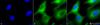
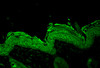
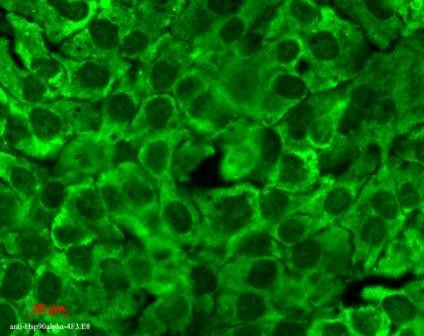
HSP90 Antibody is a rabbit polyclonal antibody directed against HSP90, offered by Assay Genie for research applications. Reported applications include WB, IHC, ICC/IF, IP and ELISA. Reported reactivity: Human, Mouse and Rat. Purified by Protein A.
HSP90 is a highly conserved and abundantly expressed molecular chaperone that plays a central role in maintaining protein homeostasis, particularly in the nervous system. Present in all eukaryotic cells, HSP90 exists in two major cytosolic isoforms—HSP90α and HSP90β—which share 85% sequence identity but differ in oligomeric state and regulatory function. Despite its classification as a heat shock protein, HSP90 is constitutively expressed at high levels, comprising up to 2% of total cytosolic protein in unstressed cells. It is essential for the folding, maturation, and stabilization of a wide range of client proteins, many of which are involved in neuronal signaling, synaptic plasticity, and stress response. These include kinases (e.g., c-Raf), transcription factors (e.g., p53), and steroid hormone receptors. In neurodegenerative diseases such as Alzheimer’s, Parkinson’s, and Huntington’s, HSP90 is implicated in both protective and pathological processes. It stabilizes misfolded proteins and prevents aggregation, but can also shield aberrant proteins from degradation, contributing to disease progression. HSP90’s interaction with co-chaperones like Cdc37 and p23 forms complexes that regulate the fate of client proteins, making it a key node in proteostasis networks. Pharmacological inhibition of HSP90—using compounds like geldanamycin—has shown promise in modulating protein quality control pathways and reducing toxic protein accumulation in neurodegenerative models. This antibody is also available conjugated to ATTO 390, ATTO 488, ATTO 594, APC, Biotin, FITC, HRP, PerCP and RPE. Supplied in 100 µl. For research use only; not for diagnostic or therapeutic procedures.
HSP90 Antibody [D7A]HSP90 Antibody [D7A] is a mouse monoclonal antibody directed against HSP90, offered by Assay Genie for research applications. Reported applications include WB, IHC, IP, ELISA and...
HSP90 Antibody [H9010]HSP90 Antibody [H9010] is a mouse monoclonal antibody directed against HSP90, offered by Assay Genie for research applications. Reported applications include WB, IHC, ICC/IF,...
HSP90 (P. falciparum) AntibodyHSP90 (P. falciparum) Antibody is a rabbit polyclonal antibody directed against HSP90 (P. falciparum), offered by Assay Genie for research applications. Reported...
HSP90 Antibody [AC-16]HSP90 Antibody [AC-16] is a mouse monoclonal antibody directed against HSP90, offered by Assay Genie for research applications. Reported applications include WB, IHC and AM...
HSP90 (total) Antibody [4F3.E8]HSP90 (total) Antibody [4F3.E8] is a mouse monoclonal antibody directed against HSP90 (total), offered by Assay Genie for research applications. Reported applications...