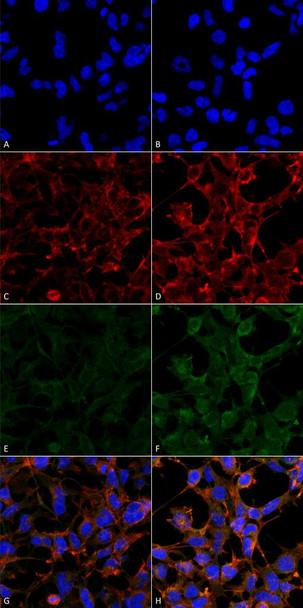
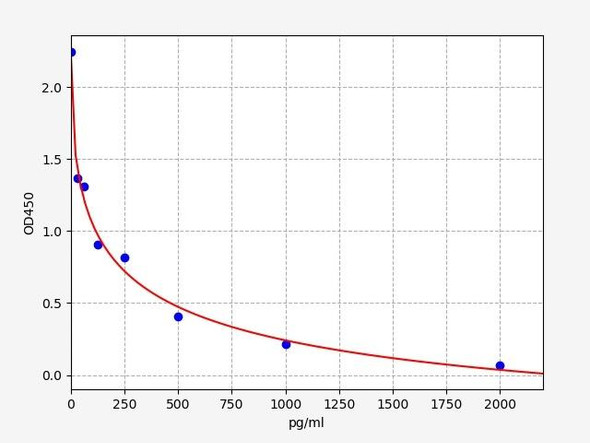
4-Hydroxynonenal Antibody [12F7] is a mouse monoclonal antibody directed against 4-Hydroxynonenal, offered by Assay Genie for research applications. Reported applications include WB, ICC/IF and ELISA. Reactivity is species independent. Supplied as IgG1, purified by Protein G.
4-Hydroxynonenal (4-HNE) is a highly reactive α,β-unsaturated aldehyde generated during lipid peroxidation of ω-6 polyunsaturated fatty acids. As a key electrophilic byproduct of oxidative stress, 4-HNE plays a dual role in cellular physiology and pathology, particularly within the central nervous system. At low concentrations, 4-HNE can activate adaptive stress responses, including the upregulation of antioxidant defense pathways. However, elevated levels of 4-HNE are cytotoxic, promoting autophagy, apoptosis, and ultimately necrosis. Its reactivity with nucleophilic amino acid residues—especially cysteine, histidine, and lysine—leads to the formation of stable protein adducts that impair enzymatic activity, disrupt signaling pathways, and compromise cellular integrity. In neuroscience, 4-HNE is increasingly recognized as a critical factor in the pathogenesis of neurodegenerative diseases. Accumulation of 4-HNE-modified proteins has been observed in Alzheimer’s disease, Parkinson’s disease, and other age-related neurodegenerative disorders. These modifications contribute to mitochondrial dysfunction, synaptic failure, and chronic neuroinflammation—hallmarks of progressive neuronal decline. Beyond the brain, 4-HNE is implicated in a wide range of oxidative stress-related conditions, including cancer, cardiovascular disease, diabetes, and liver disorders. Its role as both a biomarker and a mediator of oxidative damage makes 4-HNE a compelling target for therapeutic intervention and early disease detection. This antibody is also available conjugated to ATTO 390, ATTO 488, ATTO 594, APC, Biotin, FITC, HRP, PerCP and RPE. Supplied in 100 µg. For research use only; not for diagnostic or therapeutic procedures.
Product Name:
4-Hydroxynonenal Antibody [12F7]
Product SKU:
STMA00182
Size:
100 µg
Target:
4-Hydroxynonenal
Host Species:
Mouse
Antibody Type:
Monoclonal
Clone ID:
12F7
Research Areas:
Cancer, Oxidative Stress, Lipid peroxidation
Buffer:
PBS pH7.4, 50% glycerol, 0.09% sodium azide
Storage & Shipping:
Store at -20°C. Shipped on Blue Ice or 4°C. Conjugated variants should be stored according to the product label.
Format:
Liquid
Applications:
WB, ICC/IF, ELISA
Antibody Isotype:
IgG1
Purification:
Protein G Purified
Concentration:
1 mg/ml
Reactivity:
Species Independent
Recommended Dilution:
WB (1:1000); ICC/IF (1:50); ELISA (1:1000); optimal dilutions for assays should be determined by the user.
Specificity:
Specific for 4-Hydroxynonenal (4-HNE) modified proteins. Does not detect free 4-Hydroxynonenal. Does not cross-react with 4-Hydroxy-2-hexenal, Acrolein, Crotonaldehyde, Hexanoyl Lysine, Malondialdehyde, or Methylglyoxal modified proteins.