
PCP4 Antibody (PACO13790)

- SKU:
- PACO13790

Description
| Antibody Name: | PCP4 Antibody (PACO13790) |
| Antibody SKU: | PACO13790 |
| Size: | 50ul |
| Host Species: | Rabbit |
| Tested Applications: | ELISA, WB, IHC |
| Recommended Dilutions: | ELISA:1:2000-1:10000, WB:1:500-1:2000, IHC:1:5-1:20 |
| Species Reactivity: | Human, Mouse, Rat |
| Immunogen: | Fusion protein of human PCP4 |
| Form: | Liquid |
| Storage Buffer: | -20°C, pH7.4 PBS, 0.05% NaN3, 40% Glycerol |
| Purification Method: | Antigen affinity purification |
| Clonality: | Polyclonal |
| Isotype: | IgG |
| Conjugate: | Non-conjugated |
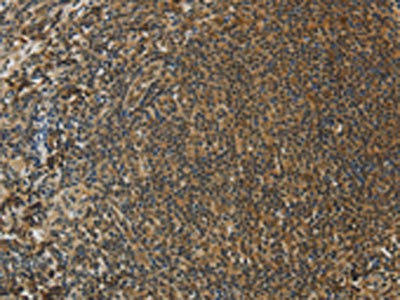 | The image on the left is immunohistochemistry of paraffin-embedded Human tonsil tissue using PACO13790(PCP4 Antibody) at dilution 1/50, on the right is treated with fusion protein. (Original magnification: x200). |
 | Gel: 12%SDS-PAGE, Lysate: 40 μg, Lane: Mouse brain tissue, Primary antibody: PACO13790(PCP4 Antibody) at dilution 1/1000, Secondary antibody: Goat anti rabbit IgG at 1/8000 dilution, Exposure time: 2 minutes. |
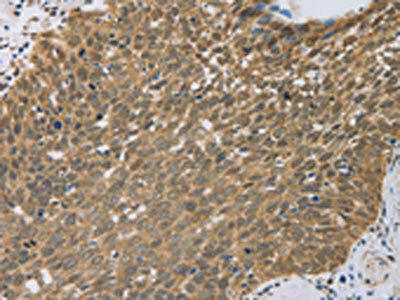 | The image on the left is immunohistochemistry of paraffin-embedded Human cervical cancer tissue using PACO13790(PCP4 Antibody) at dilution 1/50, on the right is treated with fusion protein. (Original magnification: x200). |
| Background: | PCP-4 (Purkinje cell protein 4), also known as PEP-19, is a calmodulin (CaM) regulatory protein that is highly expressed in neuronal cells. Through its IQ motif, PCP-4 mediates both the calcium-dependent binding properties of CaM and the rates of association and dissociation of calcium from the C-terminal domain of CaM. The IQ motif contains a serine residue which can be phosphorylated by all isoforms of protein kinase C (PKC). PCP-4 is implicated in uterine leiomyomas, as well as in neurodegenerative disorders such as Alzheimers disease and Huntington's disease. Additionally, overexpression of PCP-4 is thought to play a role in cerebellar hypoplasia, a key feature of Down syndrome. |
| Synonyms: | purkinje cell protein 4 |
| UniProt Protein Function: | PCP4: Probable regulator of calmodulin signaling. Belongs to the PCP4 family.Protein type: Cell development/differentiation; Calcium-bindingChromosomal Location of Human Ortholog: 21q22.2Cellular Component: cytosol; nucleusMolecular Function: calmodulin bindingBiological Process: central nervous system development |
| UniProt Protein Details: | |
| NCBI Summary: | |
| UniProt Code: | P48539 |
| NCBI GenInfo Identifier: | 48762918 |
| NCBI Gene ID: | 5121 |
| NCBI Accession: | NP_006189.2 |
| UniProt Secondary Accession: | P48539,Q6ICS4, Q93059, A6NDJ9 |
| UniProt Related Accession: | P48539 |
| Molecular Weight: | Calculated MW: 7kDa |
| NCBI Full Name: | Purkinje cell protein 4 |
| NCBI Synonym Full Names: | Purkinje cell protein 4 |
| NCBI Official Symbol: | PCP4 |
| NCBI Official Synonym Symbols: | PEP-19 |
| NCBI Protein Information: | Purkinje cell protein 4; brain specific polypeptide PEP19; brain-specific antigen PCP-4; brain-specific polypeptide PEP-19 |
| UniProt Protein Name: | Purkinje cell protein 4 |
| UniProt Synonym Protein Names: | Brain-specific antigen PCP-4; Brain-specific polypeptide PEP-19 |
| Protein Family: | Purkinje cell protein |
| UniProt Gene Name: | PCP4 |
| UniProt Entry Name: | PCP4_HUMAN |
Additional Information
Product Type: |
Antibody |
Reactivity: |
Human |
Reactivity: |
Mouse |
Reactivity: |
Rat |
Host Species: |
Rabbit |
Isotype: |
IgG |
Applications: |
ELISA |
Applications: |
WB |
Applications: |
IHC |
Antibody Type: |
Polyclonal Antibody |
Conjugation: |
Unconjugated |
Related Products


EPHA10 Antibody
Overview Product Name:EPHA10 AntibodyProduct Code:PACO64693Size:50µLTarget Names:EPHA10Species Reactivity:HumanH

otsB Antibody
Overview Product Name:otsB AntibodyProduct Code:PACO64885Size:50µLTarget Names:otsBSpecies Reactivity:Escherichia coli