
LAMC3 Antibody (PACO23788)
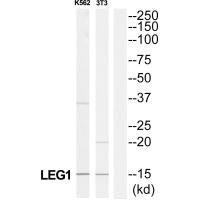
- SKU:
- PACO23788

Description
| Antibody Name: | LAMC3 Antibody (PACO23788) |
| Antibody SKU: | PACO23788 |
| Size: | 100ul |
| Host Species: | Rabbit |
| Tested Applications: | ELISA, WB, IHC, IF |
| Recommended Dilutions: | ELISA:1:2000-1:10000, WB:1:500-1:3000, IHC:1:50-1:100, IF:1:100-1:500 |
| Species Reactivity: | Human, Mouse |
| Immunogen: | Synthesized peptide derived from internal of human LAMC3. |
| Form: | Liquid |
| Storage Buffer: | Rabbit IgG in phosphate buffered saline (without Mg2+ and Ca2+), pH 7.4, 150mM NaCl, 0.02% sodium azide and 50% glycerol. |
| Purification Method: | The antibody was affinity-purified from rabbit antiserum by affinity-chromatography using epitope-specific immunogen. |
| Clonality: | Polyclonal |
| Isotype: | IgG |
| Conjugate: | Non-conjugated |
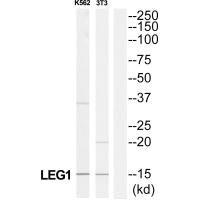 | Western blot analysis of extracts from K562 cells and 3T3 cells, using LAMC3 antiobdy. |
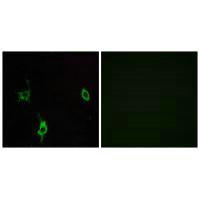 | Immunofluorescence analysis of LOVO cells, using LAMC3 antibody. |
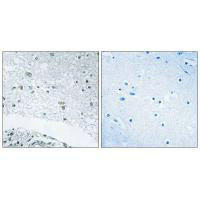 | Immunohistochemistry analysis of paraffin-embedded human brain tissue using LAMC3 antibody. |
| Background: | Binding to cells via a high affinity receptor, laminin is thought to mediate the attachment, migration and organization of cells into tissues during embryonic development by interacting with other extracellular matrix components. |
| Synonyms: | Laminin subunit gamma-3; Laminin 12 gamma 3 subunit; |
| UniProt Protein Function: | LAMC3: Binding to cells via a high affinity receptor, laminin is thought to mediate the attachment, migration and organization of cells into tissues during embryonic development by interacting with other extracellular matrix components. Defects in LAMC3 are the cause of cortical malformations occipital (OCCM). OCCM is a disease in which affected individuals develop seizures, sometimes associated with transient visual changes. Brain MRI shows both pachygyria and polymicrogyria restricted to the lateral occipital lobes.Protein type: Extracellular matrix; Motility/polarity/chemotaxis; Secreted; Secreted, signal peptideChromosomal Location of Human Ortholog: 9q34.12Cellular Component: basement membrane; extracellular region; membrane; proteinaceous extracellular matrixMolecular Function: structural molecule activityBiological Process: astrocyte development; cell adhesion; cellular morphogenesis during differentiation; extracellular matrix organization and biogenesis; retina development in camera-type eye; visual perceptionDisease: Cortical Malformations, Occipital |
| UniProt Protein Details: | |
| NCBI Summary: | Laminins, a family of extracellular matrix glycoproteins, are the major noncollagenous constituent of basement membranes. They have been implicated in a wide variety of biological processes including cell adhesion, differentiation, migration, signaling, neurite outgrowth and metastasis. Laminins are composed of 3 non identical chains: laminin alpha, beta and gamma (formerly A, B1, and B2, respectively) and they form a cruciform structure consisting of 3 short arms, each formed by a different chain, and a long arm composed of all 3 chains. Each laminin chain is a multidomain protein encoded by a distinct gene. Several isoforms of each chain have been described. Different alpha, beta and gamma chain isomers combine to give rise to different heterotrimeric laminin isoforms which are designated by Arabic numerals in the order of their discovery, i.e. alpha1beta1gamma1 heterotrimer is laminin 1. The biological functions of the different chains and trimer molecules are largely unknown, but some of the chains have been shown to differ with respect to their tissue distribution, presumably reflecting diverse functions in vivo. This gene encodes the gamma chain isoform laminin, gamma 3. The gamma 3 chain is most similar to the gamma 1 chain, and contains all the 6 domains expected of the gamma chain. It is a component of laminin 12. The gamma 3 chain is broadly expressed in skin, heart, lung, and the reproductive tracts. In skin, it is seen within the basement membrane of the dermal-epidermal junction at points of nerve penetration. Gamma 3 is also a prominent element of the apical surface of ciliated epithelial cells of lung, oviduct, epididymis, ductus deferens, and seminiferous tubules. The distribution of gamma 3-containing laminins along ciliated epithelial surfaces suggests that the apical laminins are important in the morphogenesis and structural stability of the ciliated processes of these cells. [provided by RefSeq, Aug 2011] |
| UniProt Code: | Q9Y6N6 |
| NCBI GenInfo Identifier: | 308153586 |
| NCBI Gene ID: | 10319 |
| NCBI Accession: | Q9Y6N6.3 |
| UniProt Secondary Accession: | Q9Y6N6,Q59H72, B1APX9, B1APY0 |
| UniProt Related Accession: | Q9Y6N6 |
| Molecular Weight: | 171,227 Da |
| NCBI Full Name: | Laminin subunit gamma-3 |
| NCBI Synonym Full Names: | laminin subunit gamma 3 |
| NCBI Official Symbol: | LAMC3 |
| NCBI Official Synonym Symbols: | OCCM |
| NCBI Protein Information: | laminin subunit gamma-3 |
| UniProt Protein Name: | Laminin subunit gamma-3 |
| UniProt Synonym Protein Names: | Laminin-12 subunit gamma; Laminin-14 subunit gamma; Laminin-15 subunit gamma |
| Protein Family: | Laminin |
| UniProt Gene Name: | LAMC3 |
| UniProt Entry Name: | LAMC3_HUMAN |
| Antibodies | ELISA Kits |
| LAMC3 Antibody (PACO02311) | Human LAMC3 (Laminin subunit gamma-3) ELISA Kit (HUFI03444) |
| Secondary Antibody |
| Anti-HRP Goat Anti-Rabbit IgG (H+L) Antibody (CABS014) |
| Recommended Products |
| Anti-FITC Goat Anti-Rabbit IgG (H+L) Antibody (CABS011) |
| Anti-HRP-conjugated Beta Actin Antibody (CABC028) |
Additional Information
Product Type: |
Antibody |
Reactivity: |
Human |
Reactivity: |
Mouse |
Host Species: |
Rabbit |
Isotype: |
IgG |
Applications: |
ELISA |
Applications: |
WB |
Applications: |
IHC |
Applications: |
IF |
Antibody Type: |
Polyclonal Antibody |
Conjugation: |
Unconjugated |
Related Products


Human LAMC3 (Laminin subunit gamma-3) ELISA Kit (HUFI03444)
Human LAMC3 (Laminin subunit gamma-3) ELISALAMC3 (Laminin subunit gamma-3) is an extracellular matrix glycoprotein, which is the major noncollagenous constituent of basement membranes. LAMC3 (Laminin...

Avpr1b Antibody
Overview Product Name:Avpr1b AntibodyProduct Code:PACO64609Size:50µLTarget Names:Avpr1bSpecies Reactivity:RatHos